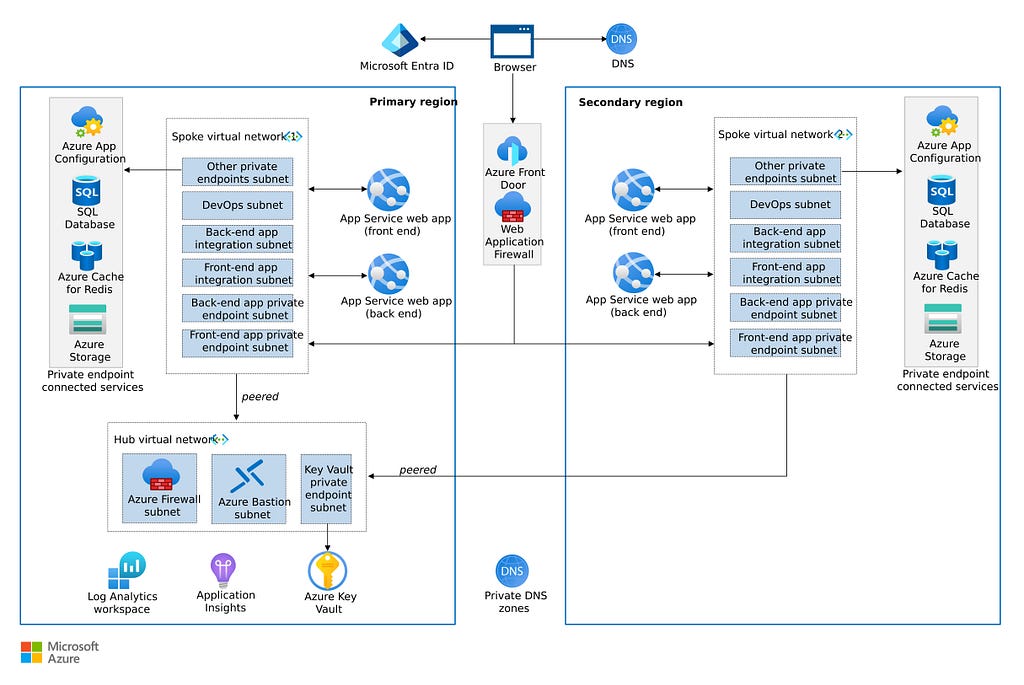
Web applications must be more than just functional — they need to be reliable, scalable, and resilient. For .NET developers, the Reliable Web App (RWA) pattern offers a proven architectural blueprint to achieve these goals. Drawing from enterprise-grade practices and cloud-native principles, this pattern, detailed in Microsoft’s Azure documentation, provides actionable guidance for building web applications that stand the test of time. In this article, we’ll explore the essence of the RWA pattern for .NET, its core principles, and how you can implement it to elevate your next project.
What is the Reliable Web App Pattern?
The Reliable Web App pattern is a set of architectural guidelines designed to enhance the dependability of web applications. Tailored for .NET developers, it leverages Azure’s cloud capabilities while remaining adaptable to on-premises or hybrid environments. The pattern is inspired by real-world enterprise scenarios, aiming to address common pain points like downtime, performance bottlenecks, and scalability challenges.
At its core, the RWA pattern emphasizes resilience, observability, and maintainability. Whether you’re modernizing a legacy ASP.NET application or building a new solution with .NET Core, this approach ensures your app can handle failures gracefully and scale efficiently under varying loads.
Core Principles of the RWA Pattern
The RWA pattern is built on several foundational principles, each addressing a critical aspect of reliability:
- Resiliency Through Fault Tolerance
Applications must anticipate and recover from failures — whether it’s a database timeout or a third-party service outage. The RWA pattern advocates for strategies like retries with exponential backoff, circuit breakers, and fallback mechanisms. For instance, using libraries like Polly in .NET, you can implement retry policies to handle transient faults seamlessly. - Scalability with Cloud-Native Design
To support growth, the pattern encourages horizontal scaling. By deploying your .NET app on Azure App Service or Kubernetes, you can scale out instances dynamically based on demand. Stateless design is key here — store session data in Azure Cache for Redis or a database instead of in-memory on a single server. - Observability for Proactive Maintenance
You can’t fix what you can’t see. The RWA pattern integrates comprehensive monitoring using tools like Azure Application Insights. Track metrics, logs, and traces to detect issues before they escalate, ensuring your app remains performant and reliable. - Secure by Default
Security isn’t an afterthought. The pattern incorporates best practices like Azure Key Vault for managing secrets, managed identities for authentication, and HTTPS enforcement to safeguard data in transit. - Cost Efficiency
Reliability shouldn’t break the bank. The RWA pattern balances robustness with cost optimization, recommending services like Azure Front Door for CDN capabilities or serverless options like Azure Functions for lightweight workloads.
Implementing the RWA Pattern in .NET
Let’s walk through a practical implementation of the RWA pattern for a .NET web application hosted on Azure. Imagine you’re building an e-commerce platform — a perfect candidate for reliability under fluctuating traffic.
- Foundation: Project Setup
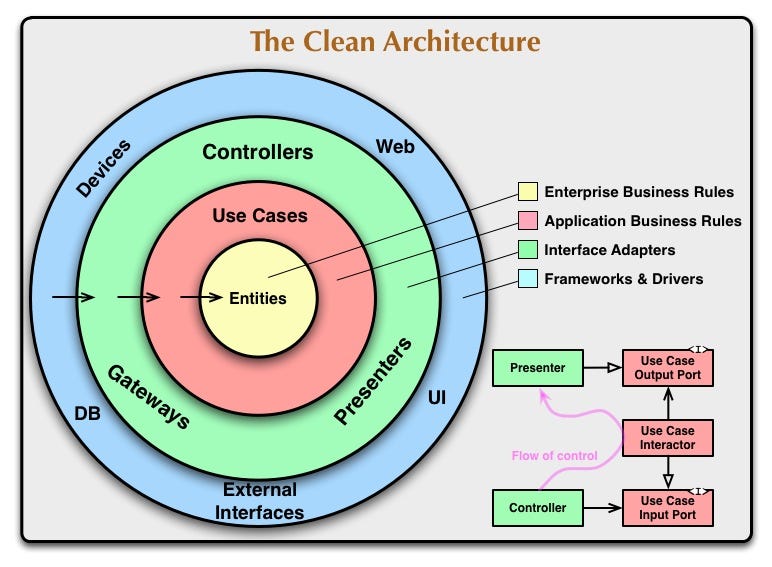
Start with a .NET 8 (or latest LTS) ASP.NET Core web app. Additionally, I “personally” recommend structuring it using Clean Architecture principles to separate concerns, making it easier to maintain and scale. Use dependency injection to wire up services like HTTP clients or data repositories.
- Resilient Data Access
Integrate Entity Framework Core with a retry policy for SQL Azure. Configure Polly to handle transient database failures:
// Pair this with Azure SQL Database's built-in high availability features.
services.AddDbContext<AppDbContext>(options =>
    options.UseSqlServer(Configuration.GetConnectionString("DefaultConnection"))
.AddTransientRetryPolicy());- External Service Calls
For third-party APIs (e.g., payment gateways), use HttpClient with a circuit breaker:
// This prevents cascading failures if the external service goes down.
services.AddHttpClient("PaymentApi")
.AddPolicyHandler(PollyPolicies.GetCircuitBreakerPolicy());- Scaling and Load Balancing
Deploy to Azure App Service with auto-scaling enabled. Configure Azure Front Door to distribute traffic globally, reducing latency and improving uptime. Store session state in Azure Cache for Redis:
services.AddStackExchangeRedisCache(options =>
{
    options.Configuration = Configuration["Redis:ConnectionString"];
});- Monitoring and Alerts
Integrate Application Insights by adding the SDK to your project:
//Set up alerts for key metrics like response time or error rates.
services.AddApplicationInsightsTelemetry(Configuration["ApplicationInsights:InstrumentationKey"]);
- Security Best Practices
Use Azure Key Vault to store sensitive configuration data:
// Enable managed identities for secure access to Azure resources without hardcoding credentials.
builder.Configuration.AddAzureKeyVault(new Uri("https://myvault.vault.azure.net/"), credential);
Benefits and Trade-Offs
Adopting the RWA pattern brings tangible benefits: reduced downtime, improved user experience, and easier maintenance. Customers can shop on your e-commerce site during peak sales without interruptions, and your team can deploy updates with confidence.
However, there are trade-offs. The initial setup requires more effort — configuring resilience policies and monitoring takes time. Costs may also rise with premium Azure services, though these can be optimized based on your app’s needs.
When to Use the RWA Pattern
The RWA pattern shines for mission-critical applications where uptime and performance are non-negotiable — think e-commerce, healthcare, or financial systems. For simpler apps with minimal traffic, a lighter approach might suffice. Evaluate your requirements: if reliability outweighs rapid prototyping, RWA is your go-to.
Conclusion
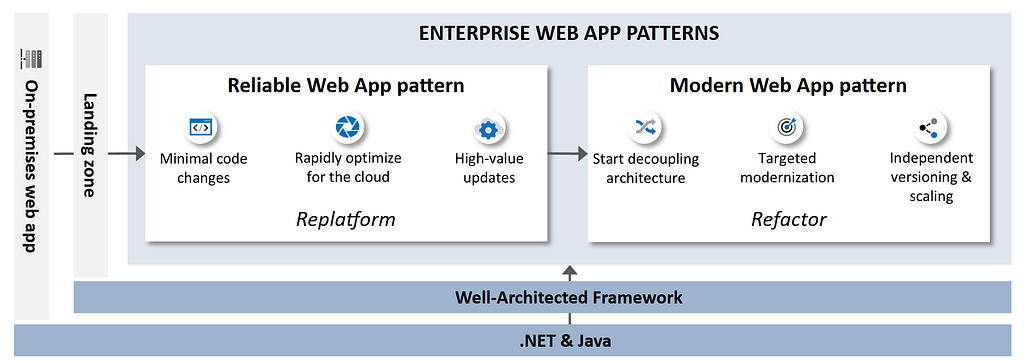
The Reliable Web App pattern is designed for organizations that are transitioning their on-premises web applications to the cloud. This pattern provides detailed prescriptive guidance on how to modify your web application’s architecture and code base to help ensure success in the cloud.
Instead of undertaking a time-consuming rebuilding process, this pattern enables a swift adoption of the cloud. It does this by emphasizing the crucial changes that need to be made, rather than all possible changes. The focus is on updates that provide high value and require minimal code changes. This focus allows you to quickly replatform your application.
Thanks for reading!
There’s reference implementation (sample) of the Reliable Web App pattern. It represents the end state of the Reliable Web App implementation for a fictional company named Relecloud. It’s a production-grade web app that features all the code, architecture, and configuration updates discussed in this article. Deploy and use the reference implementation to guide your implementation of the Reliable Web App pattern.