Artificial Intelligence is changing software engineering faster than anything we’ve seen in the last decade. New AI-powered tools can generate code, assist with architecture decisions, automate testing, and even solve complex development tasks. But while most discussions focus on technology, a recent industry report highlights something equally important:
The role of engineering leadership is changing just as fast as the technology itself.
The Engineering Leadership Report 2026, based on feedback from 600 engineering leaders, paints a clear picture of an industry adapting to AI while struggling with new challenges around leadership, talent development, and technical decision-making.
AI Is No Longer an Experiment
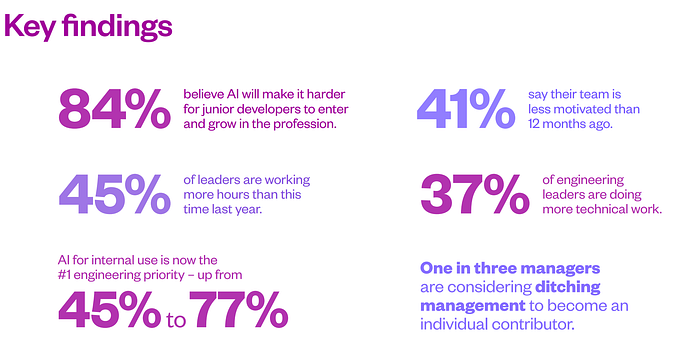
One of the most striking findings is that AI has become the number one priority for engineering organizations.
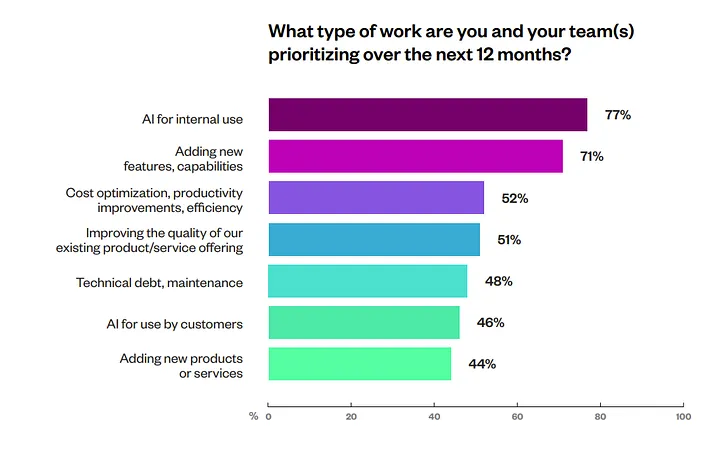
AI is no longer something teams are exploring on the side. It is becoming part of daily engineering work.
Organizations are increasingly using AI for:
- Code generation
- Technical research
- Prototyping
- Workflow automation
- Productivity improvements
The conversation has moved from
”Should we use AI?”
to
”How do we use AI effectively?”
Engineering Leaders Are Becoming More Technical
The finding that caught my attention most was this:
37% of engineering leaders reported spending more time on hands-on technical work than they did 12 months ago.
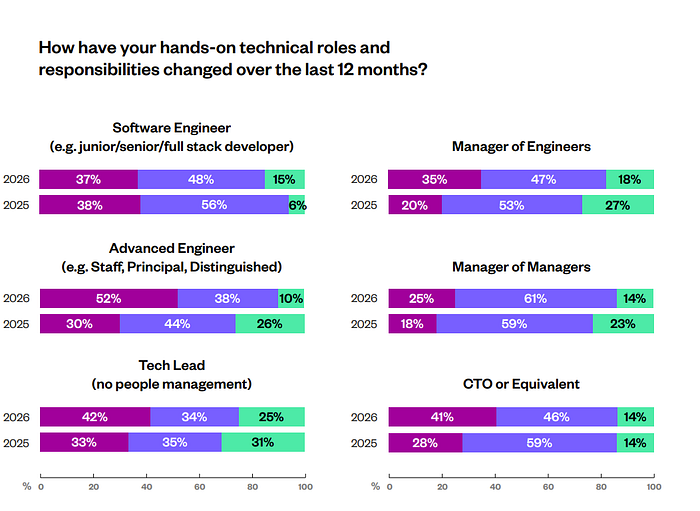
For years, many organizations followed a pattern where technical experts moved into management and gradually became less involved in day-to-day technology decisions.
Engineering leaders are becoming more involved in:
- Technical strategy
- Architecture decisions
- AI adoption
- Prototyping
- Code reviews
- Building internal tools
What makes this even more interesting is that their people leadership responsibilities have not disappeared.
They are still expected to:
- Lead teams
- Support business goals
- Communicate with stakeholders
- Drive organizational change
In other words, engineering leaders are increasingly required to balance both leadership and technical depth
AI Creates New Challenges for Talent Development
The report also highlights a growing concern around junior engineers.
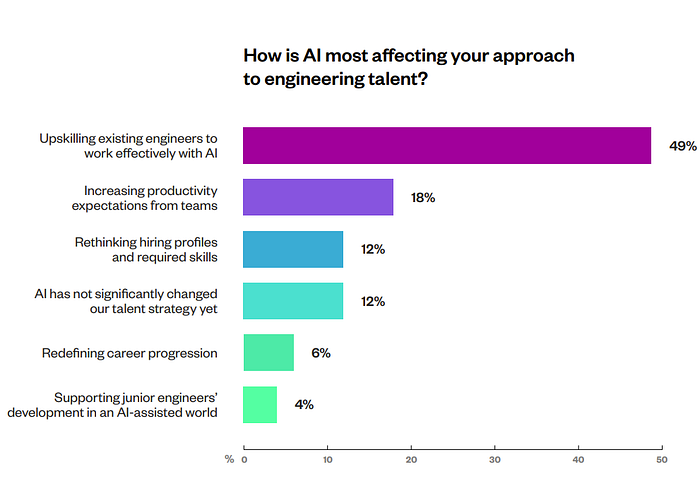
A remarkable 84% of engineering leaders believe AI will make it harder for junior engineers to enter and grow in the profession.
Traditionally, software engineers learned by:
- Writing code
- Making mistakes
- Receiving feedback
- Participating in code reviews
- Learning from experienced colleagues
AI changes this process significantly.
While AI can increase productivity, it can also remove some of the learning opportunities that helped previous generations of engineers develop their skills.
This raises an important question:
How do we continue to grow future engineering talent in an AI-assisted world?
Many organizations are actively investing in AI adoption, but far fewer seem to be focusing on how AI affects long-term skill development
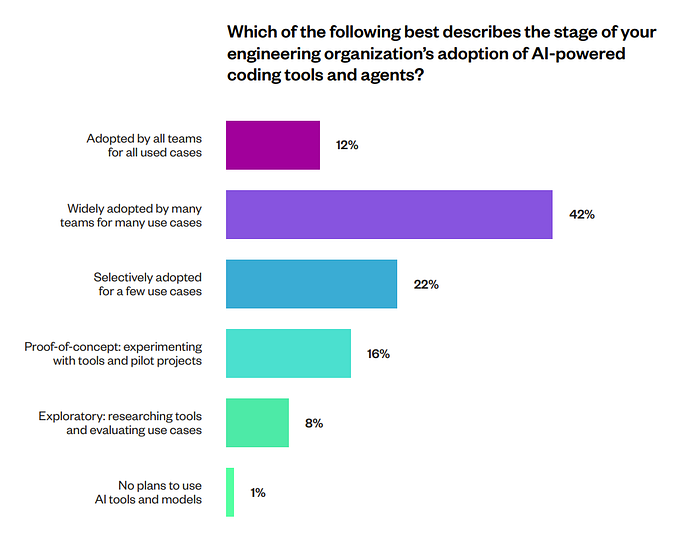
Adoption Is Moving Faster Than Measurement
Another interesting finding is that organizations are adopting AI faster than they can measure its impact.
Many companies report widespread AI usage, but relatively few have clear ways to understand:
- Actual productivity gains
- Engineering quality improvements
- Return on investment
- Long-term impact on software maintainability
This is a familiar pattern with many new technologies. Adoption happens first. Governance, measurement, and best practices come later.
The challenge for engineering organizations is making sure they are not simply moving faster, but also moving in the right direction.
My Takeaway
My biggest takeaway from this report is simple:
AI is increasing the importance of technical leadership, not reducing it.
As AI becomes part of everyday software development, organizations still need people who can:
- Make sound technical decisions
- Define engineering standards
- Guide technology adoption
- Develop engineers
- Balance business goals with technical quality
Technology continues to evolve quickly, but successful engineering organizations will still depend on strong leadership, strong engineering practices, and continuous learning.
The tools are changing.
The need for great technical leadership is not.