Github Copilot, the AI-powered code completion tool developed by Github and OpenAI, has been making waves in the development community since its beta release in June 2021. With the ability to generate code suggestions and snippets based on natural language input from the user, Copilot has the potential to revolutionize the way developers work. However, as with any new technology, there are both potential benefits and concerns that come with Copilot’s introduction to the programming world.
The Good:
- Increased productivity — One of the most obvious benefits of using Github Copilot is the potential for increased productivity. By automating the process of generating code snippets and suggestions, Copilot can save developers time and reduce the potential for errors. This can be especially helpful for repetitive tasks or when working with unfamiliar programming languages.
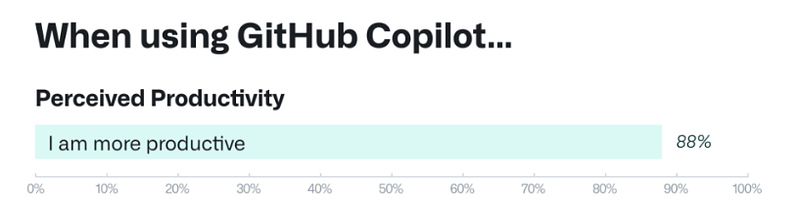
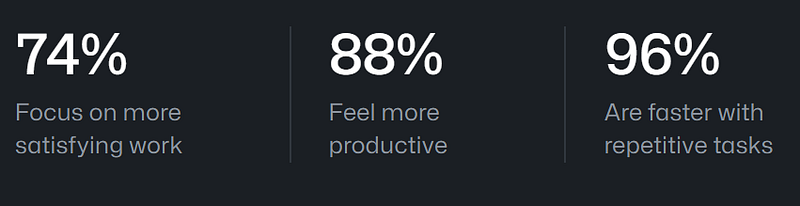
The Research shows that %88 of people feel more productive when using GitHub Copilot
2. More accessible programming — Another potential benefit of Copilot is its ability to make programming more accessible to non-experts. By generating code based on natural language input, Copilot can help beginners get started with coding or enable developers to work in new programming languages without needing to learn every detail of the syntax.
3. Improved code quality — Because Copilot is designed to suggest high-quality code snippets, it can also help improve the overall quality of the code being written. By reducing the potential for errors or inconsistencies, Copilot can help ensure that code is more reliable and easier to maintain.
Research has found GitHub Copilot helps developers code faster, focus on solving bigger problems, stay in the flow longer, and feel more fulfilled with their work.
The Bad:
- Potential for job displacement — One of the most significant concerns around Github Copilot is the potential for job displacement among programmers. While Copilot is designed to assist developers rather than replace them, there is still a worry that widespread adoption of the tool could lead to a reduction in the number of programming jobs available.
- Bias and accuracy concerns — Because Copilot is an AI-powered tool, there are also concerns around its accuracy and potential biases. While Github and OpenAI have both stated that they are working to minimize biases and improve accuracy, there is still a risk that Copilot could generate code that is incorrect or based on problematic assumptions.
- Legal and ethical concerns — As with any tool that uses AI, there are also concerns around the legal and ethical implications of using Github Copilot. For example, who owns the copyright to code generated by Copilot? Is it ethical to use AI-generated code in commercial applications without disclosing this fact to users?

The Controversial:
- Open source vs. proprietary software — Because Github Copilot is based on OpenAI’s GPT language model, there is some controversy around the use of proprietary software in open-source projects. Some developers have argued that relying on Copilot could compromise the values of open-source development, while others see it as a useful tool that can enhance open-source projects.
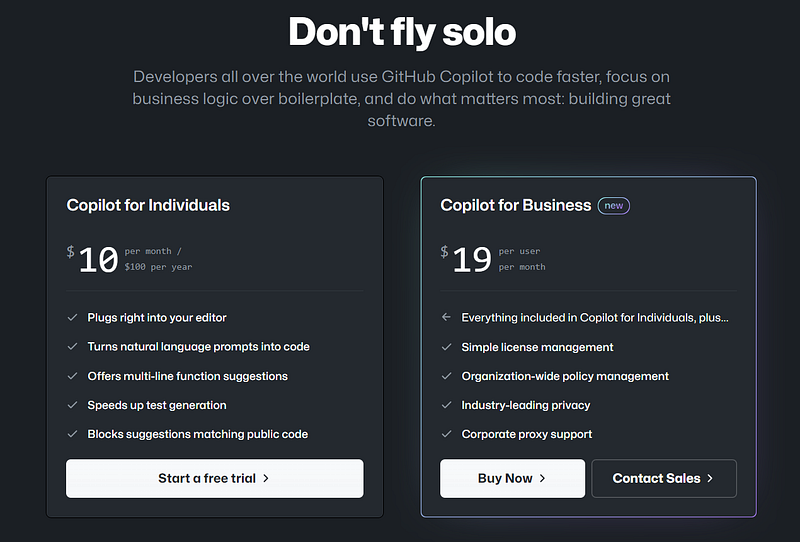
- Licensing and pricing — As of March 2023 if you want to use GitHub Copilot as “Individuals” the pricing is $10 and some developers express concern that Copilot could become prohibitively expensive or that licensing restrictions could limit its usefulness.
In conclusion, Github Copilot is a tool with significant potential for improving the way developers work. However, as with any new technology, there are both benefits and concerns that need to be considered. By addressing these concerns and working to mitigate potential risks, Github and OpenAI can help ensure that Copilot remains a useful and beneficial tool for the programming community.
Resources:
When the GitHub Copilot Technical Preview launched just over one year ago, we wanted to know one thing: Is this tool…github.blog
Does GitHub Copilot write perfect code? In a recent evaluation, we found that users accepted on average 26% of all…github.com
More content at PlainEnglish.io.
Sign up for our free weekly newsletter. Follow us on Twitter, LinkedIn, YouTube, and Discord.
Interested in scaling your software startup? Check out Circuit.