
Microservices architecture has gained significant attention in recent years as a powerful approach to designing complex software systems. However, this paradigm shift is not without its challenges, especially when it comes to initiating projects. In this article, we’ll explore the concept of “MonolithFirst,” a strategy advocated by Martin Fowler, a renowned software architect, and its merits in the context of microservices adoption.
You shouldn’t start a new project with microservices, even if you’re sure your application will be big enough to make it worthwhile. — Martin Fowler
The MonolithFirst Strategy
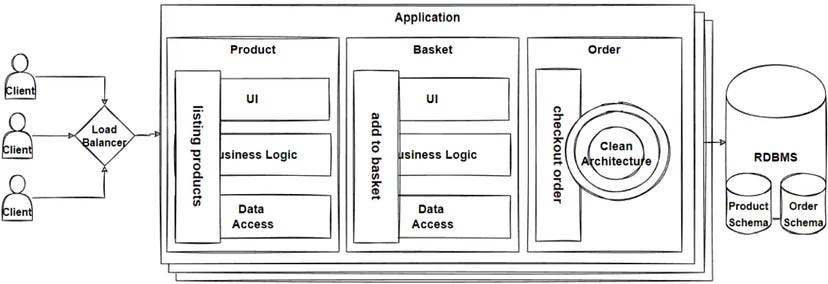
The essence of the MonolithFirst strategy lies in its cautious and pragmatic approach to embracing microservices. Instead of diving headfirst into a microservices architecture, the strategy suggests starting with a monolithic application and later transitioning to microservices as the system’s complexity and requirements evolve.

The Evolutionary Approach
One of the key advantages of the MonolithFirst approach is rooted in the concept of “You Ain’t Gonna Need It” (YAGNI). When embarking on a new software project, it’s often challenging to predict the exact features and components that will be necessary to address user needs effectively. By beginning with a monolith, teams prioritize speed and feedback, allowing them to quickly validate the core concepts of their application. This initial phase enables teams to learn about their users’ requirements and refine their understanding of the system’s architecture.
Identifying Bounded Contexts
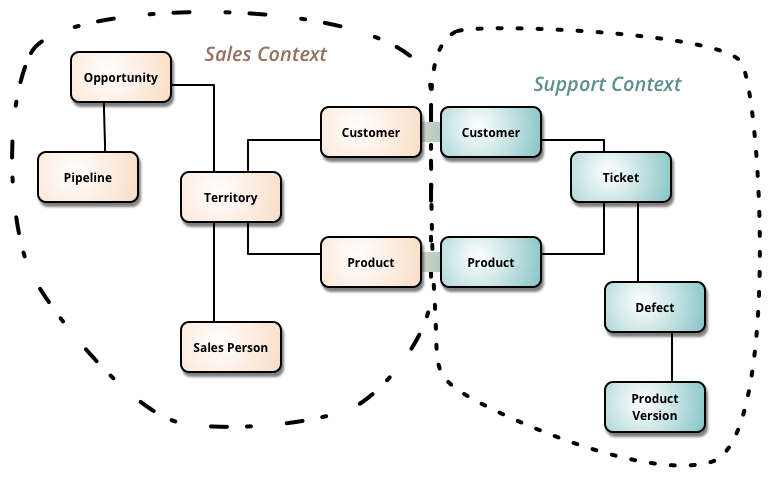
Microservices heavily rely on well-defined boundaries between services, known as Bounded Contexts. Establishing these boundaries correctly is a complex task that requires a deep understanding of the domain. Starting with a monolith provides the opportunity to identify these boundaries through practical experience. This iterative process of designing, refining, and observing the interactions within the monolith helps architects and developers make more informed decisions about service divisions when transitioning to microservices.
Peeling Off Microservices
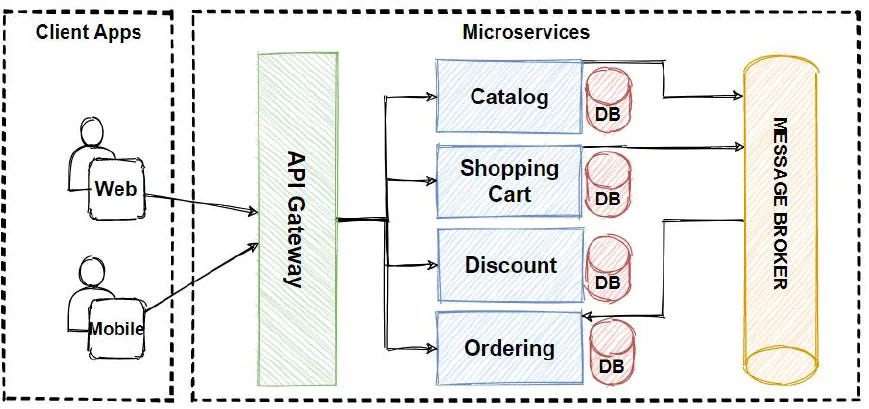
The MonolithFirst strategy allows for a gradual evolution towards microservices. Teams can start by identifying specific functionalities that could be better served as separate services and peel them off from the monolith. This incremental approach balances the advantages of microservices, such as independent scaling and technology choices, with the stability of the core monolithic architecture.
Sacrificial Architecture
Another interesting perspective is viewing the initial monolith as a “Sacrificial Architecture.” This approach recognizes that building a monolith, even if it will eventually be discarded, can provide rapid time-to-market advantages. It enables teams to validate their ideas and gather user feedback while laying the groundwork for future microservices.
Contemplating Microservices
While the MonolithFirst strategy offers several compelling benefits, it’s essential to consider alternative viewpoints. Some argue that starting directly with microservices can help teams adapt to the microservices development rhythm early on. However, this approach requires a significant level of discipline to design a monolith that can be smoothly divided into microservices.
Microservices: Not a Silver Bullet
It’s important to note that microservices aren’t a universal solution for all scenarios. The allure of microservices, with their ability to enable independent scaling, granular technology choices, and enhanced fault tolerance, comes with its own set of challenges. As an illustration, consider the case of Amazon’s Prime Video service. Facing escalating costs and challenges in managing the audio/video monitoring service within a microservices architecture, Amazon made a surprising move. They transitioned from a distributed microservices architecture to a monolithic application, achieving remarkable outcomes.
Conclusion
In the ever-evolving landscape of software architecture, the MonolithFirst strategy offers a balanced and prudent approach to adopting microservices. By beginning with a monolithic application, teams can leverage the advantages of rapid feedback, evolutionary design, and a deep understanding of their domain. This foundation sets the stage for a smoother transition to microservices as the project gains clarity, complexity, and a proven need for the distributed nature of microservices. While the microservices journey is still unfolding, the MonolithFirst strategy provides a compass for navigating the path toward a successful and scalable architecture.
Thanks for reading!